


ACS Omega Monthly Update - December 2022
What's New

2022 - A year of records
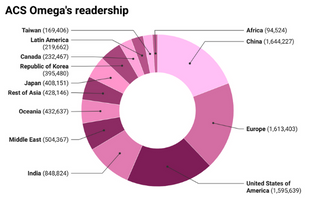
ACS Omega published 471 articles in December, a new all-time monthly record for the second month in a row, bringing total published content to 4,464 articles in 2022 (an increase of 28.4% compared to 2021). ACS Omega published more articles than RSC Advances in 2022, the first instance of this occurrence since the journal launched.
Usage this month amounted to 808,735 downloads, bringing the 2022 grand total to an impressive 9,195,194, which is a 27.1% increase from 2021. Of these 62% were from readers who do not have an institutional subscription to ACS journals, and overall the geography of our readership is well distributed.

Welcoming three new Associate Editors to ACS Omega
We are excited to welcome three new Associate Editors to ACS Omega, who have recently joined us to support our growing journal.
Prof. Chris Lorenz is based at King’s College London, UK. Chris will handle manuscripts in the areas of computational physics and chemistry.
Prof. Julie Korak is from the University of Colorado-Boulder, USA. Julie will be evaluating manuscripts in the broad areas of environmental science, technology, and engineering.
Prof. Carolina Horta Andrade is from the Federal University of Goiás, Brazil. Carolina will assess submissions in the areas of molecular modeling and drug design.
We are delighted to have them on board and look forward to working with them to help support and grow the journal in these exciting fields of chemistry.
ACS Omega - In The News
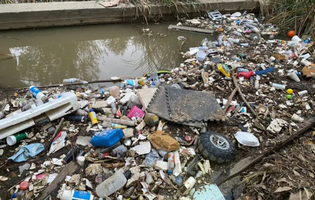
A number of scientific news briefs websites, as well as major news broadcaster Al Jazeera, have picked on this exciting study from the University of California, Riverside, which promises to upcycle plastic waste into a soil additive.
Kandis Leslie Abdul-Aziz, a UCR assistant professor of chemical and environmental engineering, and her colleagues detailed a method to convert plastic waste into a highly porous form of charcoal or char that has a surface area of about 400 square meters per gram of mass.
Such charcoal captures carbon and could potentially be added to soil to improve soil water retention and aeration of farmlands. It could also fertilize the soil as it naturally breaks down. Abdul-Aziz, however, cautioned that more work needs to be done to substantiate the utility of such char in agriculture.
Reference: Mark Gale et al., Synergistic and Antagonistic Effects of the Co-Pyrolysis of Plastics and Corn Stover to Produce Char and Activated Carbon, ACS Omega 2023, DOI: 10.1021/acsomega.2c04815
Photo by David Danelski/UCR
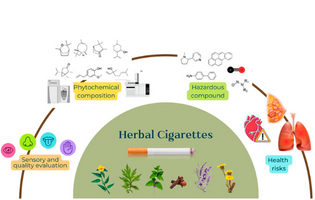
News outlets and medical briefs in various languages have shown interest in a review published in December in ACS Omega on the composition of herbal cigarettes and particularly how they fare as a nonsmoking aid.
Reference: Rania T. Abdel Rahman et al.,
Published Issues

pp. 43330-44484

pp. 44485-45740

pp. 45741-47433

Featured Articles
![Mononuclear/Binuclear [VIVO]/[VVO2] Complexes Derived from 1,3-Diaminoguanidine and Their Catalytic Application for the Oxidation of Benzoin via Oxygen Atom Transfer](https://images.acspubs.org/EloquaImages/clients/AmericanChemicalSociety/%7B62792ec8-1763-4c98-bac8-c96c665ac126%7D_Untitled_design_-_2023-02-03T144508.975.png)
In this article, the authors studied the coordination behavior of two polynucleating biaminoguanidine-derived Schiff base ligands H4sal-dag (I) and H4Brsal-dag (II) toward vanadium metal under different reaction conditions. Further, a limited study has been reported on the catalytic potential of oxidovanadium(IV/V) complexes in the oxidation of benzoin to benzyl and that too under aerobic conditions. The vanadium complexes reported here are effective catalysts for the oxidation of benzoin to benzil via OAT between DMSO and benzoin.
Mannar R. Maurya et al. Indian Institute of Technology Roorkee, India, and Universidade da Coruña, Spain
ACS Omega 2023, 8, 1, 1301–1318
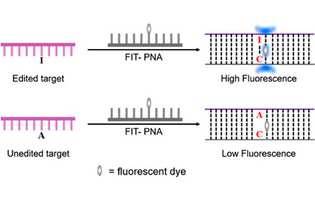
In this article, the authors describe forced-intercalation PNA (FIT-PNA) probes that are designed to bind to inosine-containing nucleic acids and use thiazole orange (TO), 4-dimethylamino-naphthalimide (4DMN), and malachite green (MG) fluorogenic dyes to detect A-to-I editing events. They show that incorporation of the dye as a surrogate base negatively affects the duplex stability but does not abolish binding to targets. They then determined that the identity of the adjacent nucleobase and temperature affect the overall signal and fluorescence enhancement in the presence of inosine, achieving an 11-fold increase, with a limit of detection (LOD) of 30 pM.
Jennifer M. Heemstra* et al. Washington University, St. Louis and Emory University, United States
ACS Omega 2023, 8, 1, 238–248
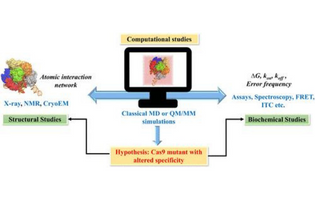
In this Review, the contribution of MD simulation to understand the CRISPR/Cas9 mechanism has been discussed, preceded by an overview of the history, mechanism, and structural aspects of the CRISPR/Cas9 system. These studies are important for the rational design of highly specific Cas9 and will also be extremely promising for achieving more accurate genome editing in the future.
Priyadarshi Satpati*, et al. Indian Institute of Technology Guwahati, India
ACS Omega 2023, 8, 2, 1817–1837
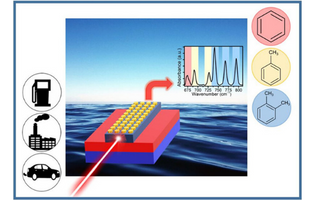
Currently, most of the monitoring is carried out in the laboratory after water sampling, via GC-MS or HPLC. There is growing demand for for portable monitoring systems with high stability, high sensitivity, wide detection range, and short response times. This study presents a step in the development of such devices.
Marion Baillieul, et al. Univ Rennes 1 and IFREMER, France
ACS Omega 2022, 7, 51, 47840–47850
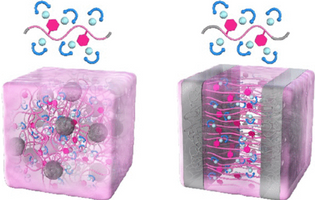
In this article, acid-infiltrated block polymer electrolyte membranes adopting a spherical or lamellar nanophase-separated structure were prepared by infiltrating sulfuric acid (H2SO4) into polystyrene-b-poly(4-vinylpyridine)-b-polystyrene (S–P–S) triblock copolymers to investigate the effects of its nanophase-separated structure on mechanical properties and proton conductivities under non-humidification. Lamellae-forming S–P–S/H2SO4 membranes with a continuous hard phase generally exhibited higher tensile strength than sphere-forming S–P–S/H2SO4 membranes with a discontinuous hard phase even if the same amount of Sa was infiltrated into each neat S–P–S film. Meanwhile, the conductivities of lamellae-forming S–P–S/H2SO4 membranes under non-humidification were comparable or superior to those of sphere-forming S–P–S/H2SO4 membranes, even though they were infiltrated by the same weight fraction of H2SO4.
Atsushi Noro* et al. Nagoya University, NISSAN ARC LTD, and Japan Synchrotron Radiation Research Institute, Japan
ACS Omega 2023, 8, 1, 1121–1130
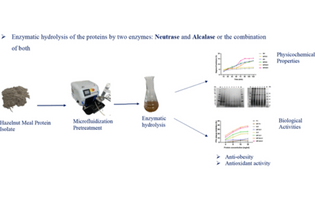
In this article, hazelnut protein hydrolysates obtained by a single or combined hydrolysis by Alcalase and Neutrase were mainly characterized for their physicochemical properties (SDS-PAGE, particle size distribution, Fourier-transform infrared (FTIR) spectroscopy, molecular weight distribution, etc.) and potential antiobesity effect (Free fatty acid (FFA) release inhibition), antioxidant activity (DPPH and ABTS methods), and emulsifying properties. The impact of a microfluidization pretreatment was also investigated.
Esra Capanoglu* et al. Istanbul Technical University, Turkey, and Chalmers University of Technology, Sweden
ACS Omega 2023, 8, 1, 1618–1631
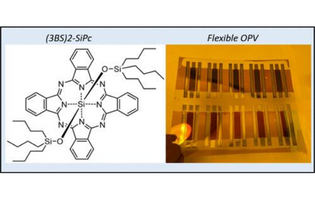
In this article, the authors demonstrate large-area organic photovoltaic (OPVs) devices based on bis(tri-n-butylsilyl oxide) silicon phthalocyanine (3BS)2-SiPc as a non-fullerene acceptor (NFA) with low synthetic complexity paired with poly(3-hexylthiophene) (P3HT) as a donor polymer. Environment-friendly nonhalogenated solvents were used to process large area OPVs on flexible indium tin oxide (ITO)-coated polyethylene terephthalate (PET) substrates. The conventional sequentially (Sq) blade-coated active layer presents very low performance due to the (3BS)2-SiPc bottom layer being partially washed off by processing the top layer of P3HT. In contrast, alternate sequentially (Alt-Sq) blade-coated layer-by-layer film shows even better device performance compared to the bulk heterojunction (BHJ) active layer.
Salima Alem*, Benoît H. Lessard* et al. University of Ottawa and National Research Council of Canada, Canada
ACS Omega 2023, 8, 1, 1588–1596
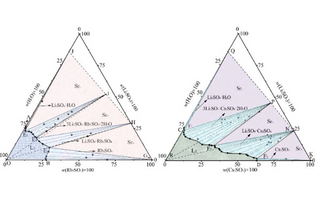
Open data for thermodynamic models for electrolyte systems
One of the main bottlenecks in the field of electrolyte thermodynamics is the lack of experimental data that may be used either to obtain consistent binary interaction parameters or to validate the thermodynamic model itself. The results published in the above manuscripts may be very useful for researchers and chemical engineers who need experimental data to validate, customize, and optimize thermodynamic models for electrolyte systems.
Rui-zhi Cui* et al., Chinese Academy of Sciences, Qinghai , China
ACS Omega 2022, 7, 50, 46594-46601
Ying Zeng, Chengdu University of Technology, China
ACS Omega 2022, 7, 51, 48531-48539
Previous Newsletters
Click below to view a previous ACS Omega Monthly Update


© 2025 American Chemical Society, 1155 16th St NW, Washington, DC 20036, USA. View our Privacy Policy