

NOVEMBER/DECEMBER 2023
Monthly Update

VIRTUAL SPECIAL ISSUE
ACS Omega's first special issue of 2024 features work from physicists researching the physics of semiconductor materials, who presented at the 51st International School and Conference on the Physics of Semiconductors - Jaszowiec 2023 - in Szczyrk, Poland.
The Virtual Special Issue is accompanied by an Editorial from Elżbieta Guziewicz and Ewa Przeździecka, the conference chair and secretary respectively.
CALL FOR PAPERS
By providing insights into molecular interactions and biological systems, three-dimensional (3D) structures are instrumental in drug discovery, optimization, and the study of complex biological processes.
This Special Issue will showcase studies about the elucidation of the 3D structures of ligands, proteins, and their complexes, from the methodological perspective to the applications of the acquired knowledge.
Submission Deadline: July 31, 2024.
NEWS ARTICLE
Next Generation Blue Light LED Could Promote Sleepiness Or Wakefulness On Demand
With the inherent sleep and wake cycle regulated by natural sunlight, the human body has evolved over millennia to be active during the day and to rest at night. However, maintaining an optimal 24-hour cycle has become increasingly problematic in modern society as more people spend the majority of the day indoors.
In a recent study conducted by researchers at Kookmin University, South Korea, in collaboration with Samsung Electronics, Co., a new type of blue light LED was developed that can regulate melatonin production, thereby providing a means to promote sleepiness or wakefulness at the touch of a button and thus potentially enabling improved control over sleeping cycles.
Reference: Yun Jae Eo et al., Development and Verification of a 480 nm Blue Light Enhanced/Reduced Human-Centric LED for Light-Induced Melatonin Concentration Control, ACS Omega (2023).

KEY JOURNAL METRICS
End of Year Summary
- ACS Omega published 362 articles in November, a decrease of 1% for published output with respect to the same timeframe in 2022, and 378 articles in December 2023, an decrease of 3% for published output with respect to the same timeframe in 2022.
- Usage continues to grow - ACS Omega's articles recorded 1,374,853 downloads in November and 1,271,132 downloads in December; this represents a 40.7% and 57.2% increase respectively in usage compared to the equivalent time period in 2022.
- In summary, ACS Omega has published 4,326 articles, recorded 14,026,364 downloads in 2023, a respective 3% decrease and 52.5% increase over the total output in 2022.


VIEWPOINT
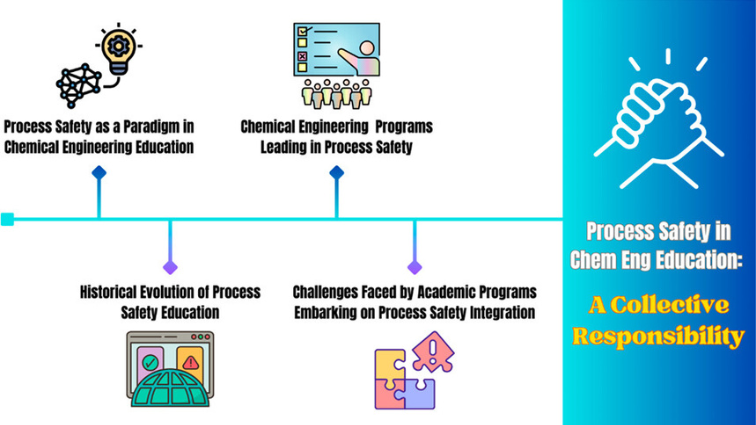
Imperative of Integrating Process Safety Education in Chemical Engineering Curricula
The purpose of this viewpoint is to encourage a discussion on the imperative of mobilizing a global update of chemical engineering education and integrating process safety. This initiative will not only inspire experts in the field to support those seeking this change but also encourage new participants, especially from countries that have not yet embraced this much-needed transformation in chemical engineering education.
Juan Guerrero-Pérez (Universidad del Valle, Colombia)
ACS Omega 2023, 8, 50, 47318–47321
REVIEW
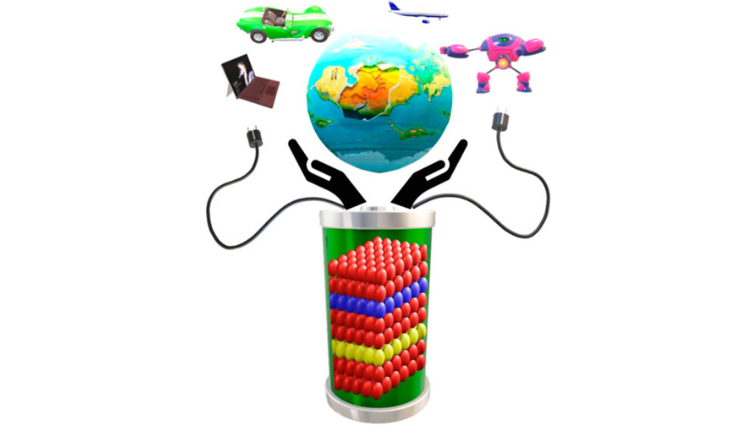
Progress of 2D MXene as an Electrode Architecture for Advanced Supercapacitors: A Comprehensive Review
Supercapacitors, designed to store more energy and be proficient in accumulating more energy than conventional batteries with numerous charge–discharge cycles, have been developed in response to the growing demand for energy. Transition metal carbides/nitrides called MXenes have been the focus of researchers’ cutting-edge research in energy storage. In this review, the recent progress, challenges, and future perspectives in developing MXene materials for the energy sector is explored.
Xavier Thankappan Suryabai et al. (University of Kerala, India)
ACS Omega 2023, 8, 47, 44375–44394
ARTICLE
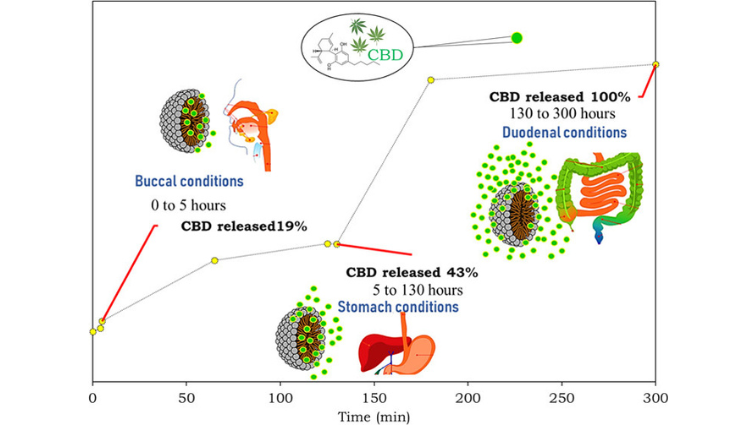
Nanoliposomes for Controlled Release of Cannabinodiol at Relevant Gastrointestinal Conditions
In this article, the researchers aimed to develop nanoliposomes using an easy and low-cost method to improve the hydrosolubility of CBD and achieve a controlled delivery of the active principle under relevant physiological conditions from the mouth to the intestine. The resulting encapsulated nano-CBDs were shown to be a selective, low-cost delivery system that provides a new form of administration and chemo treatment.
Farid B. Cortés et al. (Universidad Nacional de Colombia, Colombia)
ACS Omega 2023, 8, 46, 43698–43707
ARTICLE
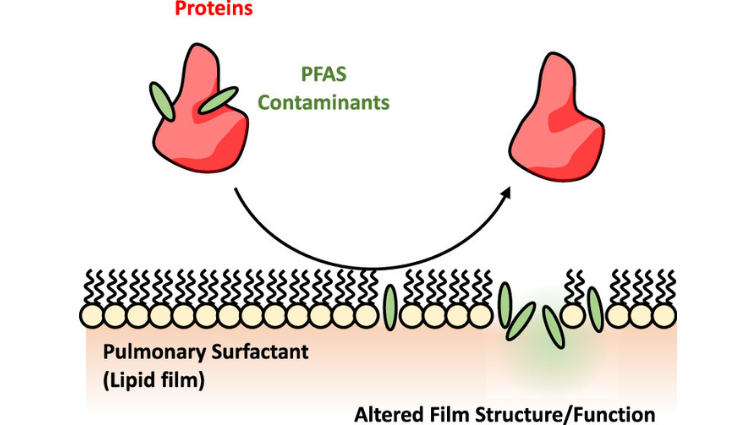
Albumin Proteins as Delivery Vehicles for PFAS Contaminants into Respiratory Membranes
Using serum albumin as a model system, researchers showed that proteins can bind PFAS contaminants and facilitate their incorporation into model pulmonary surfactant systems and lipid bilayers, which in turn significantly altered the structure and function of both model membrane systems. These results provide a potentially critical understanding of the mechanism of PFAS contamination in biological systems.
Alexander C. Y. Foo et al. (St. Francis Xavier University, Canada)
ACS Omega 2023, 8, 46, 44036–44043
ARTICLE
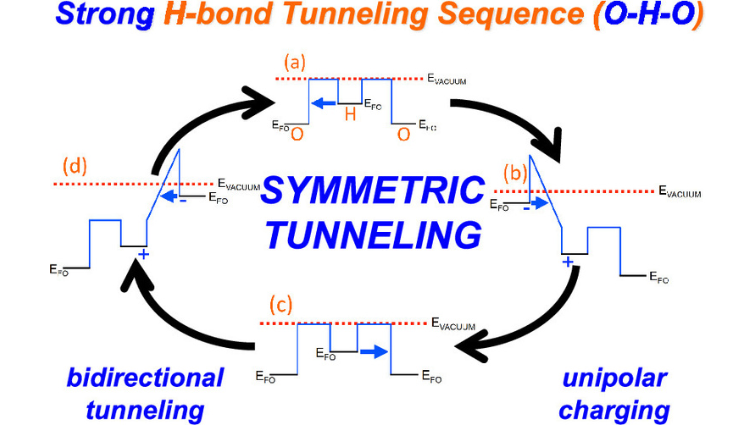
New Perspective on Hydrogen Bonding
Prof. John F. Wagner proposes a new electronic model for hydrogen bonding, in which an intermediate hydrogen atom acts as a bridge bond connecting two adjacent atoms, X and A, via quantum mechanical tunneling of the hydrogen electron. Frontier orbital positioning and interatomic distances determine the tunneling intensity, which in turn establishes the hydrogen bond strength; a strong (weak) bond occurs with intense (sluggish) tunneling.
John F. Wagner (Oregon State University, United States)
ACS Omega 2023, 8, 44, 41674–41679
ARTICLE
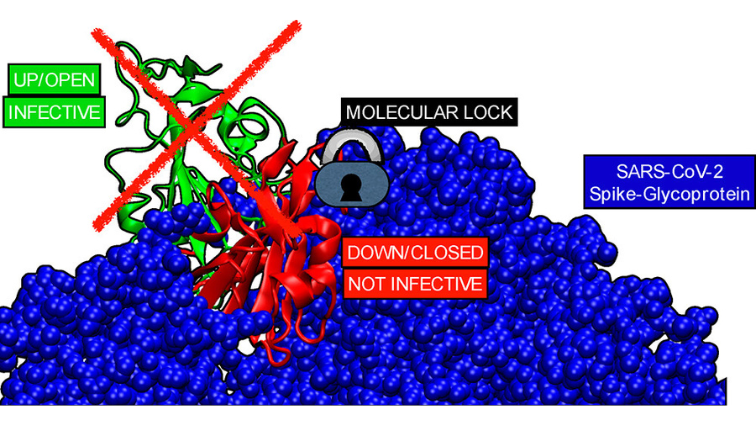
Targeting the Spike: Repurposing Mithramycin and Dihydroergotamine to Block SARS-CoV-2 Infection
Researchers investigated the possibility of jamming the opening of the Receptor Binding Domain (RBD) of the spike protein of SARS-CoV-2 with small compounds. Through in silico screening, two potential candidates were identified that would lock the Receptor Binding Domain (RBD) in a closed configuration, preventing the virus from infecting the host cells. Both drugs are FDA approved and show that compound repurposing might lead to potential clinical drug candidates for the treatment of SARS-CoV-2 infection.
Ivan Coluzza et al. (BCMaterials, Spain)
ACS Omega 2023, 8, 46, 43490–43499
PREVIOUS MONTHLY UPDATES
Click below to view previous ACS Omega Monthly Updates:


Copyright © 2026 | American Chemical Society | 1155 Sixteenth Street NW | Washington, DC 20036