
ACS Omega Monthly Update - September/October 2023
What's New
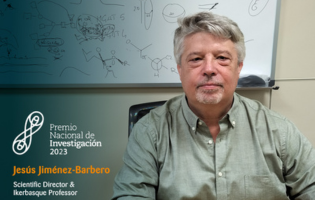
The Ministry of Science and Research of Spain has awarded Prof. Jesús Jiménez-Barbero, ACS Omega Senior Associate Editor, with the 2023 'Enrique Moles' National Research Prize in recognition of his outstanding scientific career and valuable contributions to understanding the mechanisms that regulate molecular recognition processes between carbohydrates and proteins.
This prestigious award is the highest recognition bestowed by the Government of Spain to celebrate the exceptional contributions of a scientist. Please join us in congratulating Prof. Jiménez-Barbero for this outstanding achievement.
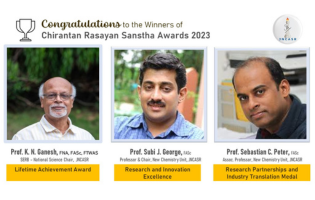
Chirantan Rasayan Sanstha (CRS) has awarded Prof. Krishna N. Ganesh, ACS Omega Co-Editor-in-Chief, the 2023 Lifetime Achievement Award.
Prof. Ganesh is recognized alongside two of his colleagues from JNCASR Bangalore, Profs. Subi J. George (Research and Innovation Excellence) and Sebastian C. Peter (Research Pertnerships and Industry Translation Medal), highlighting their outstanding contributions to the development of science and industry in India and around the world.
Please join us in congratulating Prof. Ganesh and his colleagues for their recognition.
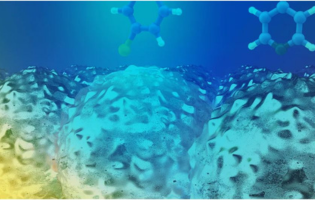
ACS Omega welcomes submissions on current advances in preparing nanostructures that enable enhanced spectroscopies, explore state-of-the-art developments in instrumentation and report on new methods and observations related to surface-enhanced spectroscopy. The Virtual Special Issue will be jointly published with the Journal of Physical Chemistry and Analytical Chemistry.
Submission Deadline: March 31, 2024
ACS Omega - In The News
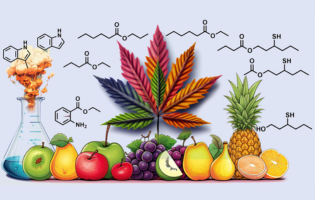
In recent research on the metabolite compounds found in cannabis, Terpenes have been the primary focus of aromatic studies; however, these may not be the only compounds responsible for cannabis' distinctive aroma. In a recent study, industrial researchers from Abstrax Tech, a company focused on the analysis of aromatic compounds from cannabis and other plant sources, discovered that numerous minor non-terpenoid compounds are closely associated with the atypical sweet or savory scents produced by cannabis.
Reference: Iain W. H. Oswald, Thomas J. Martin et al., Minor, Nonterpenoid Volatile Compounds Drive the Aroma Differences of Exotic Cannabis, ACS Omega (2023).
Key Journal Metrics
- ACS Omega published 330 articles in September, a decrease of 3.6% for published output YOY in the same timeframe in 2022, and 481 articles in October 2023, an increase of 1.7% for published output YOY in the same timeframe in 2022.
- Usage continues to grow - ACS Omega's articles recorded 1,333,521 downloads in September and 1,426,706 downloads in October; this represents a 68.5% and 62.1% increase respectively in usage compared to the equivalent time period in 2022.
Published Issues


Featured Articles
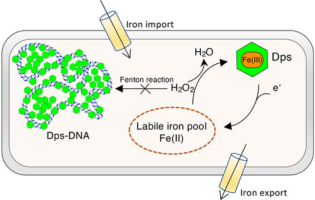
Iron plays a vital role in the maintenance of life, being central to various cellular processes, from respiration to gene regulation, and iron storage proteins such as DNA binding proteins under starvation (Dps) ensure that nontoxic forms of iron are readily available for these processes. This review examines the multifarious properties of Dps through relevant biochemical and structural studies with a focus on iron storage and ferroxidation, as well as its role as an iron donor to iron-sulfur clusters found in many biological processes.
Sunanda Margrett Williams and Dipanker Chatterji, University of London (U.K.) and Indian Institute of Science, Bangalore (India)
ACS Omega 2023, 8, 38, 34299–34309
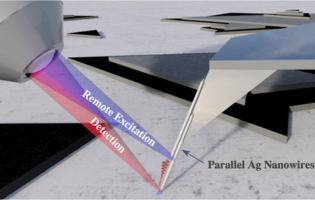
This article presents the development of remote excitation tip-enhanced photoluminescence (RE-TEPL), a technique which reduces the diffraction-limited background signal resulting from far-field excitation and increases the achievable spatial resolution relative to standard TEPL. By utilizing a novel AgNW coupler design, the technique was demonstrated via the spectral mapping of a MoSe2/WSe2 lateral heterostructure.
Wannes Peeters et al., KU Leuven (Belgium), AIST Chogoku, Kyoto University, Tokyo Metropolitan University and Hokkaido University (Japan)
ACS Omega 2023, 8, 41, 38386–38393

Automatic optimization methods for compounds in the vast compound space are critically important for drug discovery and material design. In this article, a new open-source compound optimization method, based on molecular graphs using deep reinforcement learning, is demonstrated with a case study which showed successful enhancement of the activity of dopamine receptor D2.
Daiki Erikawa et al., Tokyo Institute of Technology (Japan)
ACS Omega 2023, 8, 40, 37431–37441
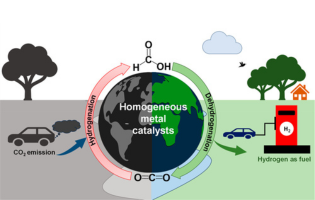
Carbon dioxide (CO2), a valuable feedstock, can be reutilized as a hydrogen carrier by hydrogenating CO2 to formic acid (FA) and releasing hydrogen by FA dehydrogenation in a reversible manner, thus realizing the production of hydrogen for fuel. In this mini-review, the authors examine recent developments and approaches in transition-metal-based molecular catalysts for reversible hydrogen storage and release.
Sanjeev Kushwaha et al., Indian Institute of Technology Indore (India)
ACS Omega 2023, 8, 42, 38773–38793
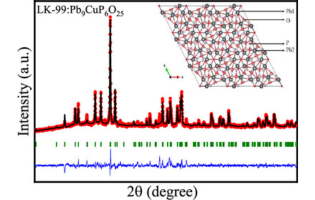
The recent report of LK-99 exhibiting room temperature superconductivity by Sukbae Lee et al. has triggered much debate amongst the materials community; however, efforts to replicate the results have been unsuccessful thus far. In this article, the first replication attempt to be externally peer-reviewed, Kapil Kumar et al. present their efforts to synthesize and study phase-pure LK-99 and conclude that their experimental results do not indicate the presence of superconductivity in LK-99 at room temperature and ambient pressure.
Kapil Kumar et al., CSIR-National Physical Laboratory (India)
ACS Omega 2023, 8, 44, 41737–41743
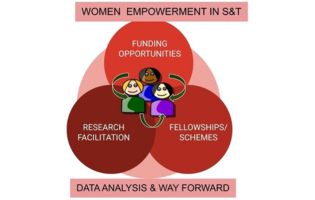
In this viewpoint, Dr. Agarwal and Dr. Kaur map out the participation of women through research proposal submission and approval in selected schemes of the Science and Engineering Research Board (SERB) and analyzed analyzed subject-wise trends and the role of institutes in developing the capacities of women scientists to perform research in cutting-edge technologies. The study recommends potential areas where women researchers should be further encouraged to participate and generate solutions for societal problems using the tools of science and technology.
Monika Agarwal and Perminder Jit Kaur, Science and Engineering Research Board (SERB) and Centre for Policy Research-Indian Institute of Science, Bangalore (India)
ACS Omega 2023, 8, 45, 42006–42013
Previous Newsletters
Click below to view a previous ACS Omega Monthly Update:


© 2025 American Chemical Society, 1155 16th St NW, Washington, DC 20036, USA. View our Privacy Policy